Interior & Foundation Invaders
Carpenter ants are the region's more common wood destroyer — treated at the colony, not the hole.
See details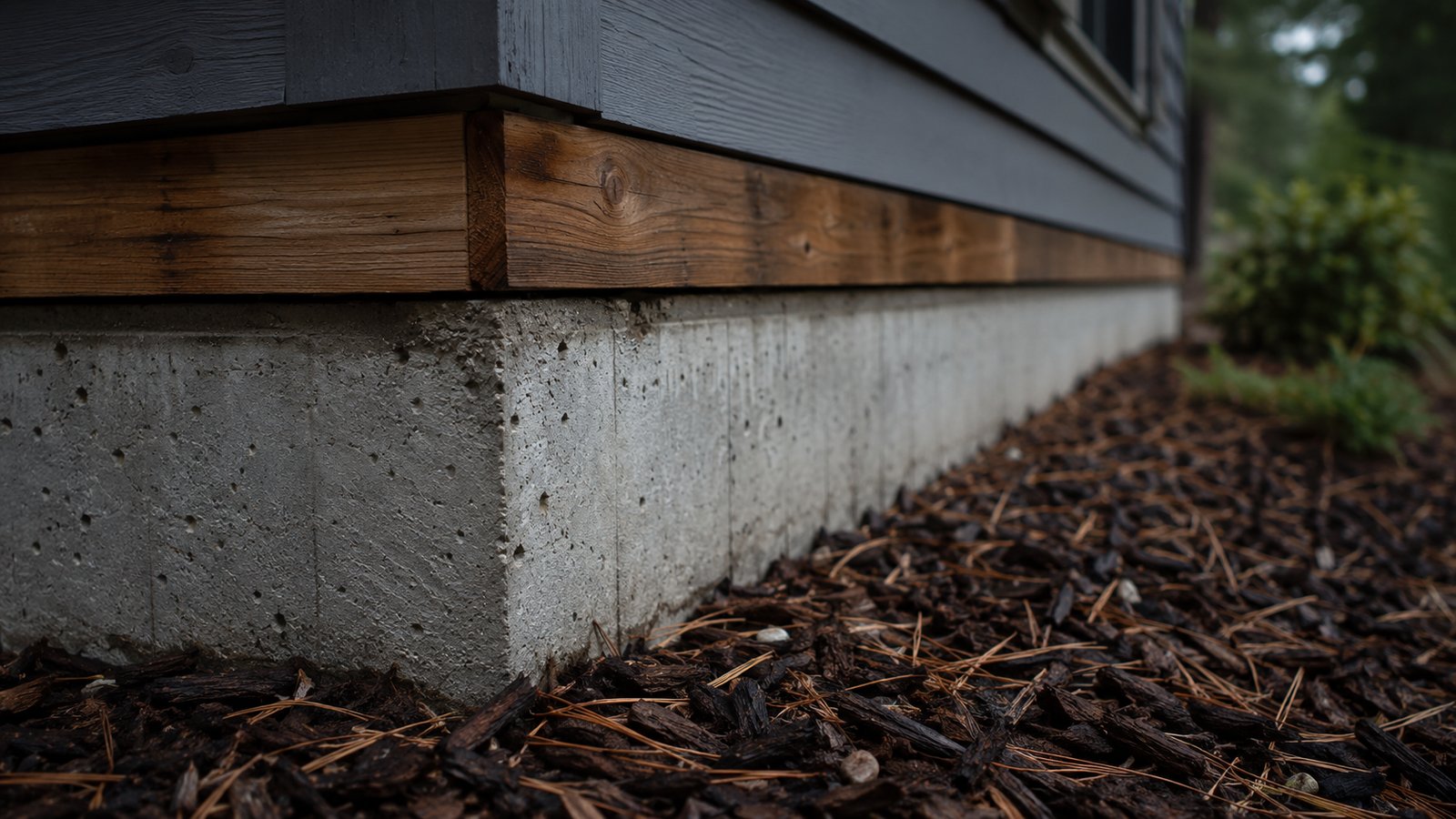
Diagnosis First
Hollow-sounding trim, a sagging deck post, mud tubes on a foundation wall — homeowners across Coeur d'Alene and the surrounding valleys find the damage long before they find the insect. Treatment without diagnosis is guesswork, so every termite job starts with an inspection of the places wood meets ground, moisture collects, and colonies actually live. Then we treat the problem we found, not the one we assumed.
Where Wood Meets Ground
Wood-destroying insects need two things a house readily supplies: cellulose to feed on and moisture to survive in. That combination shows up in predictable places — a sill plate resting on damp concrete, a deck post sunk in soil, mulch piled against siding, a crawlspace that never quite dries out after spring.
Because the damage begins inside the wood, the outside can look sound long after the inside is not. An inspection reads the conditions as well as the insects: where water sits, where wood touches ground, and where a colony would have found its way in. Fixing the conditions is what keeps the treatment from becoming an annual ritual.
For real-estate transactions we provide Wood Destroying Organism (WDO) inspections — commonly required for VA and FHA loans — and document what the property actually shows.
Know What You Have
In this region, the first suspect for damaged wood is usually the carpenter ant — it excavates wood for nesting galleries rather than eating it, leaving coarse, sawdust-like debris below clean holes. Termites work differently, consuming wood from the inside out and leaving mud tubes rather than shavings. The two problems look similar from a distance and are not solved the same way, which is why interior and foundation invaders and termites are treated as separate diagnoses.
A Wood Destroying Organism inspection is a documented assessment of a structure for pests that damage wood. Lenders commonly require one for VA and FHA loans, and buyers ask for one when a crawlspace or deck raises questions. We inspect, identify what is present, and record the conditions we find. Where moisture is the underlying driver, structural and sanitary services address it at the source.
FAQs
Mud tubes running up foundation walls, wood that sounds hollow when tapped, discarded wings near windowsills, and small piles of frass. Damage usually starts where wood meets soil, out of sight, which is why an inspection tells you far more than a guess does.
Carpenter ants excavate wood to build nesting galleries but do not eat it, and they leave coarse, sawdust-like debris below clean holes. Termites consume wood from the inside out. Around here the carpenter ant is the more common wood destroyer, so identification comes first.
Wood Destroying Organism inspections are commonly required for VA and FHA loans, and we provide them for real-estate transactions. The inspection identifies pests like carpenter ants or termites that damage wooden structures, and documents the conditions we find on the property so buyers, sellers, and lenders all see the same picture.
Related
Carpenter ants are the region's more common wood destroyer — treated at the colony, not the hole.
See detailsMoisture control and crawlspace encapsulation consultation target the conditions wood-destroying insects need.
See detailsScheduled inspections catch wood-to-soil contact and moisture problems before an insect finds them.
See detailsFree, No-Pressure Quote
Tell us what you are seeing and where. You will get an inspection, a straight answer about what is actually in the wood, and a clear price before anything is treated.
Get My Free Quote